
Residential Treatment Center NJ
Table of Contents
Understanding Residential Treatment Centers in New Jersey
Residential Treatment Center in New Jersey provides essential live-in programs offering 24/7 support, medical monitoring, and therapeutic interventions for individuals recovering from substance use disorders. These structured recovery programs in NJ are crucial for severe addictions needing intensive intervention, featuring phases like initial assessment, group and individual therapy, and aftercare planning to ensure lasting sobriety.
In New Jersey, regulated by the Division of Mental Health and Addiction Services (DMHAS), centers maintain high standards, often addressing co-occurring mental health issues through integrated care. At Restore Northeast, we specialize in outpatient continuum services such as Partial Hospitalization (PHP) and Intensive Outpatient (IOP) programs, providing evidence-based therapies like CBT for dual diagnosis treatment. While we do not offer residential treatment nj, our expertise supports transitions from inpatient addiction treatment in New Jersey. For finding options, including residential drug rehab in New Jersey, use resources like the SAMHSA Treatment Locator, which lists accredited facilities statewide.
This overview sets the stage for exploring local availability in areas like Morris County and Randolph, key services, and considerations for immersive addiction care facilities that align with your recovery needs.
Overview of Addiction Treatment in the New Jersey Area
New Jersey offers a robust network of addiction treatment options, with a strong emphasis on residential programs across its regions. The state hosts numerous Residential Treatment Center in New Jersey facilities, particularly concentrated in the northern areas like Morris County, where serene environments in places such as Randolph support focused recovery. State initiatives, including the REACH NJ program under the Division of Mental Health and Addiction Services (DMHAS), enhance accessibility by providing 24/7 helpline support and referrals to treatment providers, regardless of insurance status. These efforts address common program structures in residential settings, such as group therapy and medical detoxification support, while tackling urban-rural disparities in care availability.
We at Restore Northeast recognize that choosing a treatment region in New Jersey significantly impacts recovery outcomes, influencing factors like travel convenience, cultural fit, and specialized care access. Proximity to urban centers can ease family involvement, while rural settings promote tranquility essential for healing. Data from DMHAS reports highlight these variations, guiding individuals toward suitable inpatient addiction treatment in New Jersey options.
| Region | Approximate Number of Facilities | Average Distance from Major Cities | Typical Program Length | Specialized Services (e.g., Dual Diagnosis) |
|---|---|---|---|---|
| Northern NJ (e.g., Morris County) | 15+ facilities | 20-30 miles from NYC | 30-90 days | High availability for dual diagnosis |
| Central NJ (e.g., Mercer County) | 10-12 facilities | 10-20 miles from Trenton | 28-60 days | Moderate dual diagnosis options |
| Southern NJ (e.g., Camden County) | 8-10 facilities | 5-15 miles from Philadelphia | 60-120 days | Growing holistic programs |
This comparison, sourced from DMHAS facility distribution reports with program lengths aligned to SAMHSA guidelines, reveals northern New Jersey’s edge in facility density and dual diagnosis support, ideal for complex needs. Central regions balance accessibility with shorter stays, while southern areas emphasize extended holistic approaches near Philadelphia. Such insights empower informed decisions, considering personal circumstances and post-treatment transitions.
Accreditations like CARF ensure quality across statewide addiction programs, with northern facilities often excelling due to higher resources. In areas like Randolph, the peaceful surroundings foster effective residential drug rehab in New Jersey experiences. REACH NJ eligibility, open to all residents facing substance use challenges, underscores inclusive access points.
At Restore Northeast, we complement these residential services through our outpatient programs, including Partial Hospitalization (PHP) and Intensive Outpatient (IOP), offering individualized treatment plans with evidence-based therapies for seamless recovery continuation in Morris County and beyond. Our whole-person approach integrates family support services to sustain long-term wellness.
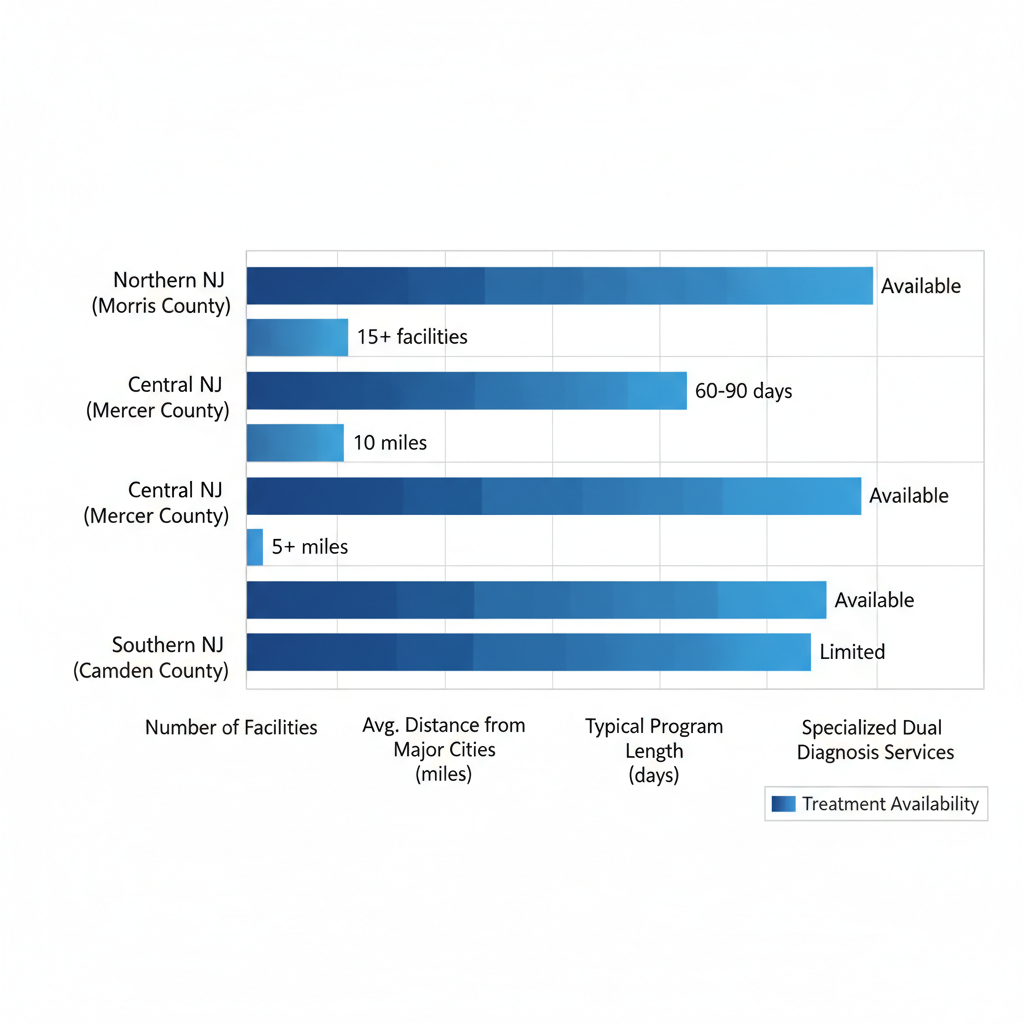
Comparison of residential treatment availability in New Jersey regions
residential treatment New Jersey options vary by region, but integrating outpatient care post-residential enhances outcomes, as we observe in supporting local NJ recovery facilities.
Available Residential Treatment Services in NJ
Residential treatment centers in New Jersey offer immersive recovery services designed to support individuals through structured NJ programs for substance use and co-occurring mental health disorders. These facilities provide a comprehensive approach, incorporating evidence-based therapies as outlined by SAMHSA, such as cognitive behavioral therapy (CBT) and 12-Step facilitation. Individual and group therapy sessions address underlying issues, while dual diagnosis treatment integrates mental health support. Many centers emphasize holistic elements like art therapy and nutritional counseling to promote overall well-being. Family involvement options, including education sessions, help strengthen support networks. New Jersey regulations ensure medical oversight, with licensed professionals monitoring health needs.
A typical day in a Residential Treatment Center in New Jersey begins with structured activities to foster routine and stability. Mornings often include mindfulness practices or yoga, followed by breakfast and therapy sessions. Afternoons feature group discussions, educational workshops on relapse prevention, and recreational time for physical activity. Meals are balanced, with guidance from nutritionists to aid recovery. Evenings wind down with reflection or peer support meetings, ensuring a balanced schedule that promotes healing without overwhelming participants. This inpatient addiction treatment in New Jersey creates a safe environment for intensive care.
As programs conclude, transitions to outpatient care become essential. At Restore Northeast, we complement residential addiction treatment New Jersey with our Partial Hospitalization Program (PHP) and Intensive Outpatient Program (IOP), offering continued individualized treatment plans. CARF-accredited centers, common in the state, maintain high standards to facilitate smooth handoffs, ensuring ongoing progress in a whole-person approach.
Local Considerations for Residential Treatment in NJ
When seeking a Residential Treatment Center in New Jersey, understanding local factors can make the process smoother, especially in areas like Morris County where options vary. Typical durations for inpatient addiction treatment in New Jersey range from 30 to 90 days, tailored to individual needs and dual diagnosis integration. Under New Jersey’s mental health parity laws, as outlined by the NJ Division of Mental Health and Addiction Services (DMHAS), facilities accept Medicaid and major private insurances, ensuring coverage for residential addiction treatment without excessive out-of-pocket costs. We at Restore Northeast assist with insurance verification to help navigate these benefits for our outpatient programs.
Average costs for residential drug rehab in New Jersey fall between $10,000 and $30,000 per month, though sliding scale fees and state aids improve affordability. NJ facility guidelines often include transportation options, such as shuttles provided through programs like REACH NJ, which offers 24/7 support and referrals regardless of financial status, helping families access area-specific recovery rules seamlessly.
Personal items policies emphasize focus, limiting electronics but allowing phones in some centers to maintain connections. These considerations address financial barriers empathetically, empowering informed decisions before transitioning to outpatient care.
Getting Started with Residential Treatment in NJ
Embarking on initial recovery steps in NJ begins with reaching out to specialized facilities for guidance. At Restore Northeast, we assist clients through our admissions and insurance verification services, helping transition into appropriate care options in Randolph and surrounding areas. For those considering a Residential Treatment Center in New Jersey, the process starts with contacting centers for initial screenings to assess needs, including dual diagnosis considerations for co-occurring mental health issues.
The admissions process for inpatient addiction treatment in New Jersey typically involves comprehensive evaluations, medical assessments, and completing necessary paperwork. Expect individualized treatment plans tailored to your circumstances, with programs often lasting 30 to 90 days or longer for sustained recovery. We guide families through this, ensuring smooth integration into effective addiction treatment center New Jersey that prioritize evidence-based approaches.
Preparation is key for residential drug rehab in New Jersey. Gather insurance documents, identification, and medical records in advance to streamline verification. Pack essentials like comfortable clothing, toiletries, and personal items, while discussing family support roles. Plan for long-term options extending beyond initial stays, focusing on aftercare for ongoing stability.
Utilize free resources like the SAMHSA Treatment Locator for confidential searches and admissions for state programs, connecting to verified providers. Check CARF accreditation during intake to ensure quality care standards are met. These steps reduce overwhelm and set a strong foundation for recovery.
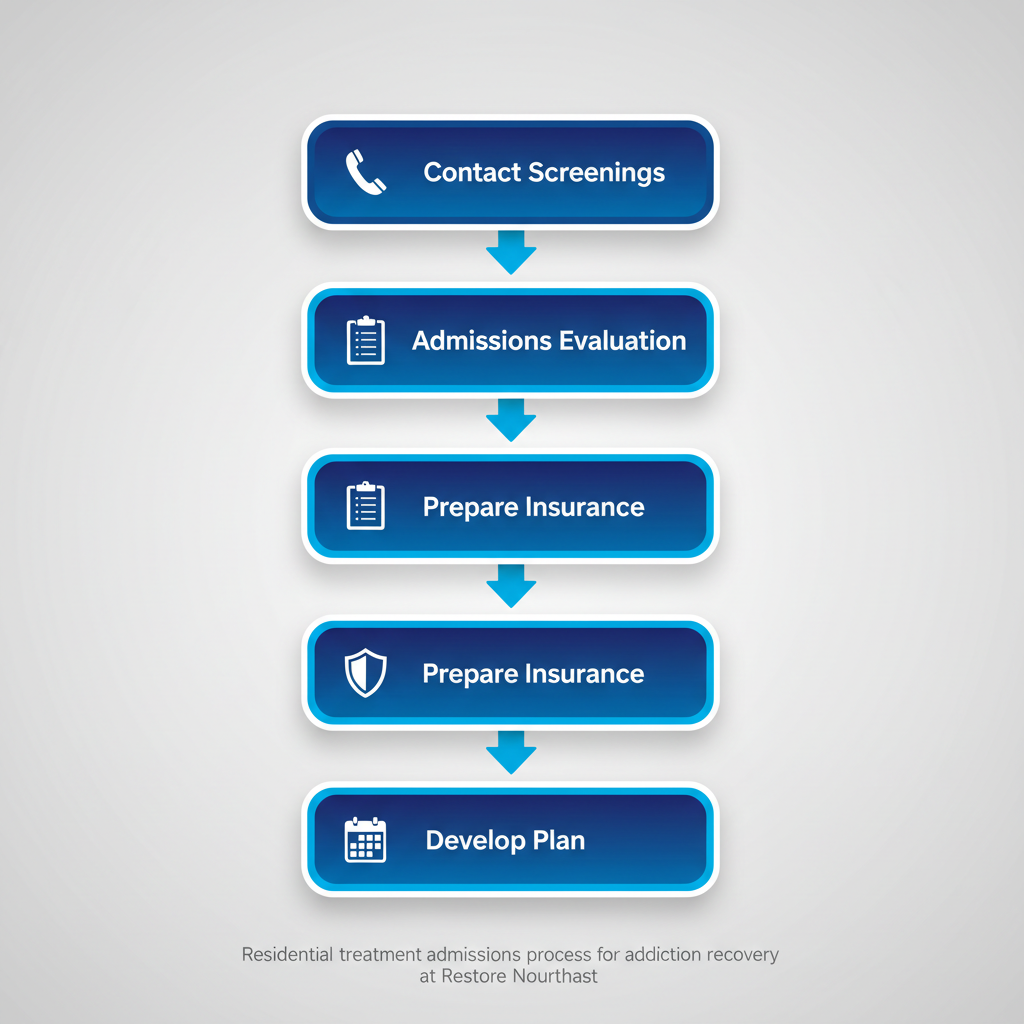
Step-by-step guide to beginning residential treatment in New Jersey
Results may vary; consult healthcare professionals for personalized advice.
Navigating Residential Treatment Options in New Jersey
Residential treatment centers in New Jersey offer structured programs lasting 30 to 90 days, with services like therapy, medical detox, and holistic care addressing costs from $10,000 to $30,000 monthly, often mitigated by insurance. Local factors, such as family proximity in Morris County, support better outcomes.
Empower your choices in inpatient addiction treatment in New Jersey or residential drug rehab in New Jersey by using the SAMHSA Treatment Locator for tailored searches emphasizing dual diagnosis approaches.
We at Restore Northeast commit to your NJ recovery pathways through specialized outpatient programs in Randolph, ensuring seamless transitions to residential addiction treatment Randolph NJ when needed. Contact us for guidance, referrals, and individualized treatment plans.
Resources
Access 24/7 ReachNJ Helpline for Addiction Recovery Support
Explore Types of Substance Use and Mental Health Treatments
Get New Jersey Addiction and Mental Health Services Access
Search CARF-Accredited Addiction Treatment Providers by Location